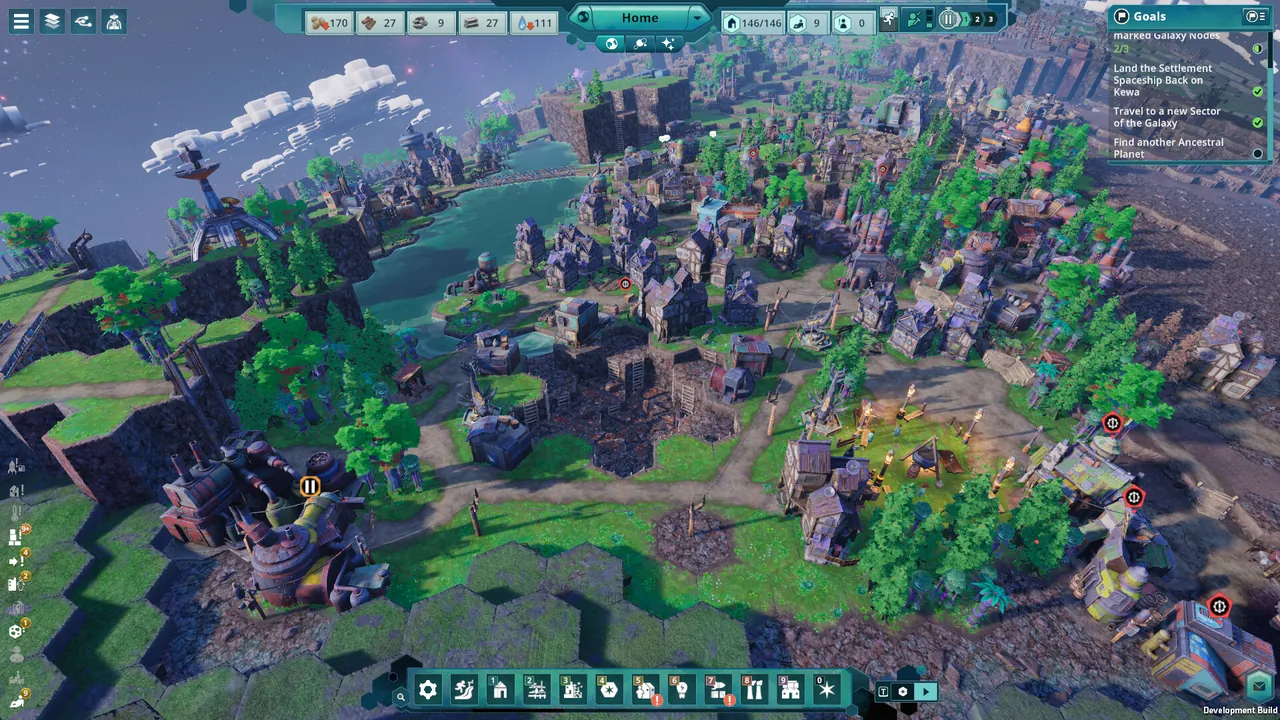
Every colony in Beyond These Stars starts on potatoes and water, and the pair is more balanced than it looks: Peeps restore happiness and energy by eating and drinking at home, so a colony with full granaries and a strained Water Pump still has unhappy Peeps. This page covers what they consume, where it happens, and how the menu widens once planets are in play.
What do Peeps eat at the start?
Potatoes, and the building list makes the priority obvious. The official wiki lists the four starting unlocks as the Hut, Potato Patch, Water Pump and Woodcutter — one food building, one drink building, one housing building, one construction building. Potatoes are not an option among foods; they are the food supply.
That start is deliberately austere. Potatoes keep Peeps alive and working, and nothing about them produces a happiness surplus. The beginner guide covers the first-hour build order that keeps the patch staffed; this page picks up from there.
Where and when do Peeps eat?
At home, between shifts. The official wiki describes each Peep occupying a home slot in an accommodation building and returning to that home to eat, drink and relax. Happiness is spent during the work shift and restored during the break, and the same break restores energy.
Three details from the wiki change how you lay a settlement out:
- Everyone breaks at once. All Peeps in a population work and take breaks at the same time, so if there are more jobs than workers, lower-priority workplaces are neglected during a shift. Your food and water buildings have to survive that boundary.
- Home decides where you can work. Peeps will work in any workplace within 16 tiles of their home. Distance is a food tax in both directions: a long walk to work is also a long walk home to eat.
- Decoration beats the sofa. A Peep who can visit a decoration building recovers happiness faster than one who only relaxes at home, which makes a bench worth as much as a pantry in the right place.
| What restores what | Where it happens | Source |
|---|---|---|
| Happiness | Eating and drinking at home, then passively during the rest of the break | Official wiki, Peeps |
| Happiness, faster | Visiting a decoration building during the break | Official wiki, Peeps |
| Energy | Eating, drinking and relaxing on break — more valuable inputs restore more | Official wiki, Peeps |
What does drink add?
More than most guides admit. Water is the first drink; Tea is the second, and the official wiki describes it as helping satisfy the Peeps' need for relaxation and happiness. The chain is worth knowing because it ties three buildings together:
| Step | Building | What happens |
|---|---|---|
| Grown | Farmhouse | Produces the Tea |
| Stored | Hut | Peeps gather it and keep it for daily use |
| Processed | Apothecary | Turns Tea into Poultices |
That last line is the crossover most players miss: Tea is both a comfort drink and an input to medicine, so a tea shortage can surface as a sickness problem rather than a happiness one. The sickness and mourning guide covers the Apothecary side.
How do I widen the menu beyond potatoes?
Two routes, and they arrive at different times.
The Kitchen, later. The developer's Peep Business diary puts it plainly: Peeps can subsist perfectly well on basic foods like potatoes and other crops, but they appreciate a well-rounded, home-cooked meal. Once you start settling new planets and gain access to a broader variety of ingredients, you unlock buildings that process them — and the diary's worked example is the Kitchen, whose meals are what the colony eats instead of raw staples.
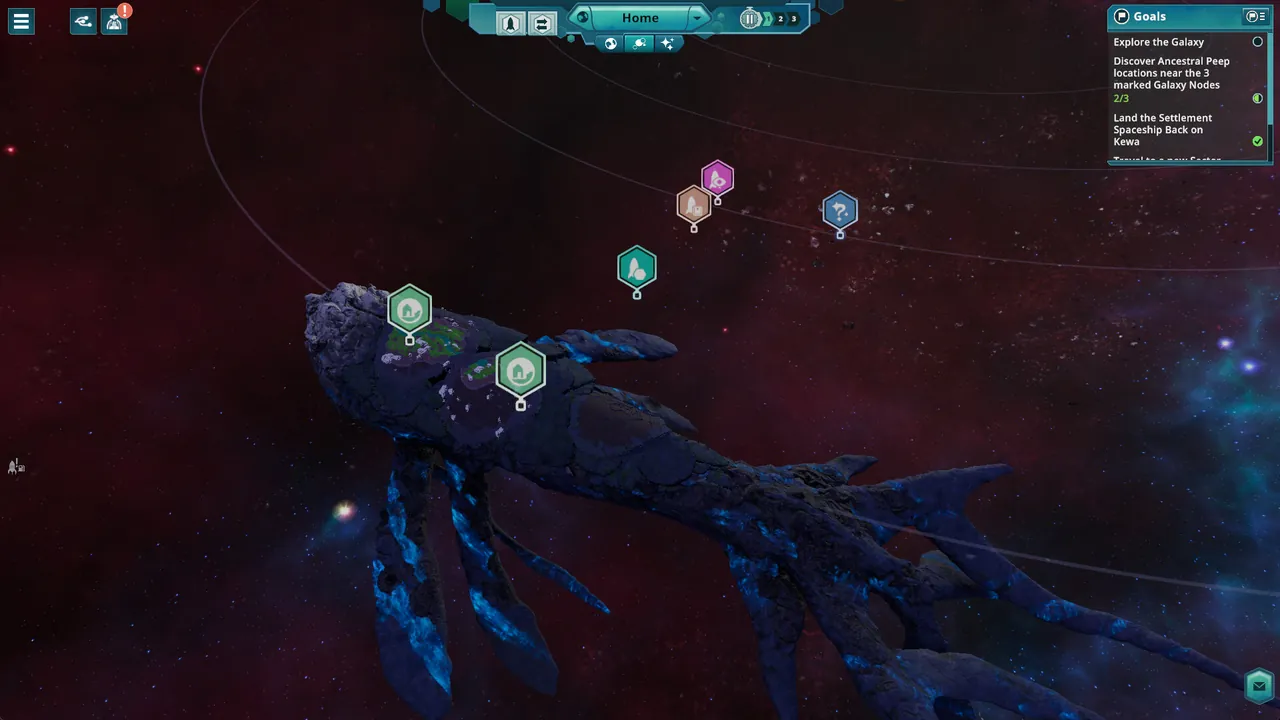
The planet ingredients themselves. The Settleable Planets diary describes planets supplying chickens, cows, berries and wheat, plus shells that convert to cement, and unlocking the Pasture, Trawler and Orchard. That is where milk, eggs and fruit enter the supply chain, and where a survival diet turns into something that generates happiness.
Getting there means the planets and outposts guide, and before that a working shipping arrangement covered in ships and landing pads.
Why does the layout of food buildings matter so much?
Because the Hut's adjacency effects reward one specific pattern and punish the obvious alternative. Per the official wiki:
| Placement | Effect |
|---|---|
| Hut touching 2 Potato Patches | +20% happiness |
| Hut touching 2 Houses | -20% happiness, +30% storage of food and drink |
| Hut touching 3 other Huts | +1 housing spot, -20% energy restored by food and drink |
The wiki's own early-game advice is to arrange Huts and Potato Patches so each Hut touches exactly two patches — spreading the huts out so they do not pick up the happiness penalty from clustering. The trap is the third row: packing huts together looks efficient because it buys a housing slot, but it taxes the very thing food is supposed to deliver by cutting 20% off the energy that food and drink restore.
Food also feeds the happiness value that decides strikes. The happiness and strikes guide covers the threshold, and the tips and tricks page collects the layout habits that keep break times long enough to matter.
What is still unconfirmed?
- Specific recipe inputs and outputs for the Kitchen are not published. The diary names the building and its purpose, not its recipes.
- Exact recovery values for individual foods are not published. The wiki confirms more valuable food restores more; it does not enumerate the tiers.
- Whether meals can be imported through Trade Ships is not stated. Do not plan a colony on imported dinners.
- Tailor and Weaver appear in the wiki's building list without pages, so clothing and cotton production remain undocumented — the Bing queries asking how to make clothing do not yet have a source-backed answer.
Pro tip: Build the Water Pump before the second Potato Patch. Drink is half of every break, and a colony that grows faster than its water supply loses happiness at the meal it was counting on.
Sources
- Official Hooded Horse wiki, Peeps (home slots, eating and drinking, 16-tile radius, synchronised shifts, decoration): https://wiki.hoodedhorse.com/Beyond_These_Stars/Peeps
- Official Hooded Horse wiki, Hut (adjacency effects, two-patch pattern): https://wiki.hoodedhorse.com/Beyond_These_Stars/Hut
- Official Hooded Horse wiki, Tea (Farmhouse, Hut storage, Poultices): https://wiki.hoodedhorse.com/Beyond_These_Stars/Tea
- Official Hooded Horse wiki, Technology tree (four starting buildings): https://wiki.hoodedhorse.com/Beyond_These_Stars/Technology_tree
- Steam announcement, "Developer Diary: Peep Business" (basic foods, Kitchen meals, planet ingredients): https://store.steampowered.com/news/app/2295060/view/1790214123224062
- Steam announcement, "Dev Blog #28 Settleable Planets": https://store.steampowered.com/news/app/2295060/view/1838407329267634