Resources in Beyond These Stars arrive from four layers: what your Peeps gather on Kewa's surface, what a Mine pulls from underground deposits, what your own production lines throw off as byproduct, and what other planets export. Which layer a material sits in tells you what you must unlock before you can spend it.
On Kewa: Gathering, Water and Food
The surface layer is where every colony begins. Standing forest yields Wood — a Woodcutter fells the trees and a Sawmill turns them into usable timber. Forests are renewable if you let them spread, and forest growth also pushes atmosphere outward, which widens the breathable ground you can build on.
Wood rewards patience differently from ore. A forest left to spread keeps producing, so harvesting in rotation beats clear-cutting a district you will want to build on later. The surface gives you wood and the space to build; metals and minerals come from the underground layer, which is the practical reason it exists at all.
Water arrives through the Water Pump, and rivers are a starting condition you can choose rather than something you build: Sandbox mode lets you decide whether Kewa begins with one at all. Thirsty Peeps stop being productive, so water is the resource most likely to bite when housing outruns supply.
Food begins and, for a long while, ends with Potatoes. They are the Peep staple, and the diet stays narrow until you settle elsewhere. Widening it is worth the effort, because variety is one of the clearest ways to lift happiness without changing how hard anyone works. Where a colony begins is partly a choice as well — Sandbox mode lets you pick which resources exist on Kewa at all, including whether the surface supports animals or deposits, so two sandbox runs can open with very different economies.
Underground: Mining Deposits
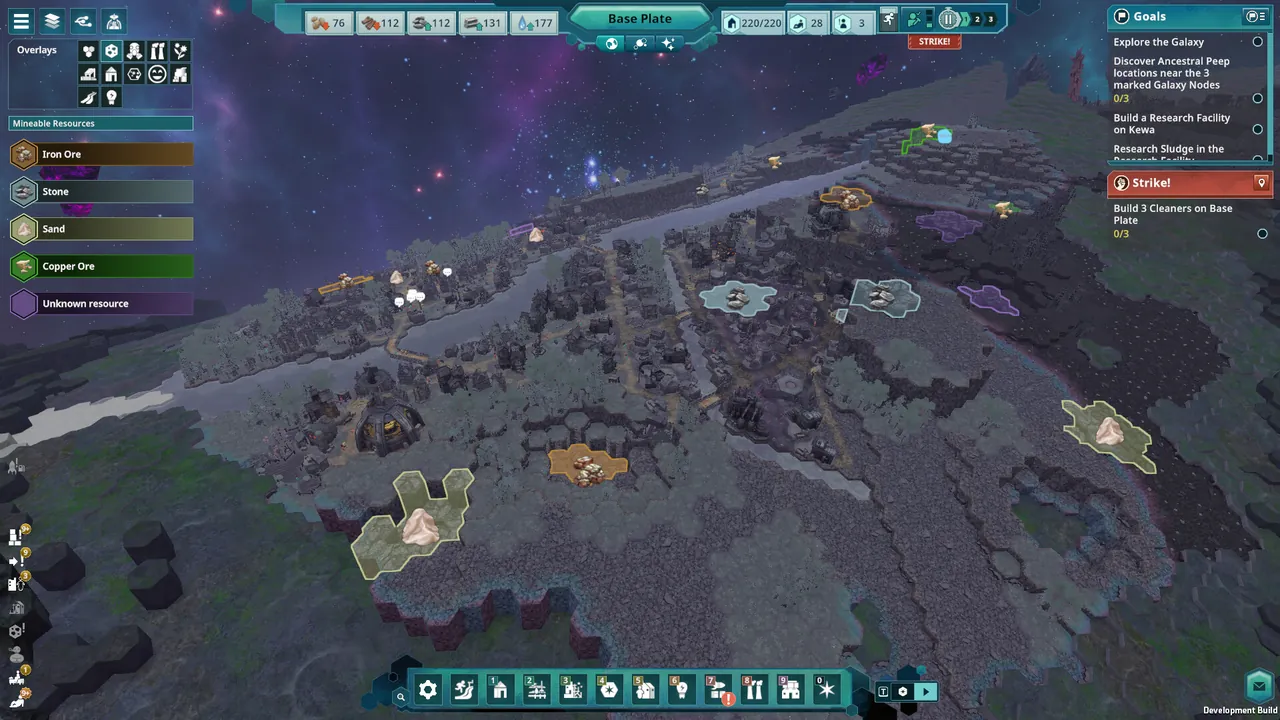
Below the buildable surface sit deposits that only a Mine can reach. The mineable-resources overlay in current builds lists Iron Ore, Stone, Sand, Copper Ore and at least one deposit marked unknown, and that overlay is the tool to plan with — it shows where a shaft is worth the footprint it costs.
Deposits explain why the overlay matters more than the surface view. A hill that reads as plain terrain can sit on top of Iron Ore, and the only reliable way to know is to switch the view before you plan the district above it.
Each ore points in a different direction. Iron Ore and its smelted output drive the metal and tool branch of the production chains, while Copper Ore points toward electronics. Sand and Stone round out the list of confirmed deposits, alongside the type the overlay leaves unnamed. Iron Ore and Copper Ore point clearly at particular chains, which is enough to decide which seam to open first.
Mining carries a placement cost beyond the ore itself, because a shaft occupies ground that could otherwise hold housing, which makes the overlay a layout tool as much as a resource one. It is also the only warning you get about the unidentified deposit, so mark its position even before you know what it yields.
Nothing in the published material specifies quantities, ratios or how deep a deposit runs, so treat the overlay as the practical guide before you commit a district to a spot that looks mineral-rich but is not. How much a deposit holds is not stated anywhere either, so plan a Mine's surroundings to be reworked if the seam runs dry.
Byproducts, Imports and Waste
A good share of your stockpile is material you never planned to produce. Soot and Wood Waste come out of production itself, and both have downstream uses rather than being pure refuse: soot supplies the Cleaners that scrub pollution (and, per hands-on previews, can be routed into steel), while wood waste is the only early source of Compost. Waste handling has its own building, the Dump, and its own pressures.
Terraforming adds two more materials that read as byproducts but behave like resources. Debris comes from Landscaper digging and is either stored or stacked to raise new ground; Compost, made in the Compost Heap from a steady wood waste supply, is what turns bare tiles fertile for farms and new forests. A colony that plans for both early spends less time later wondering where its buildable land went.
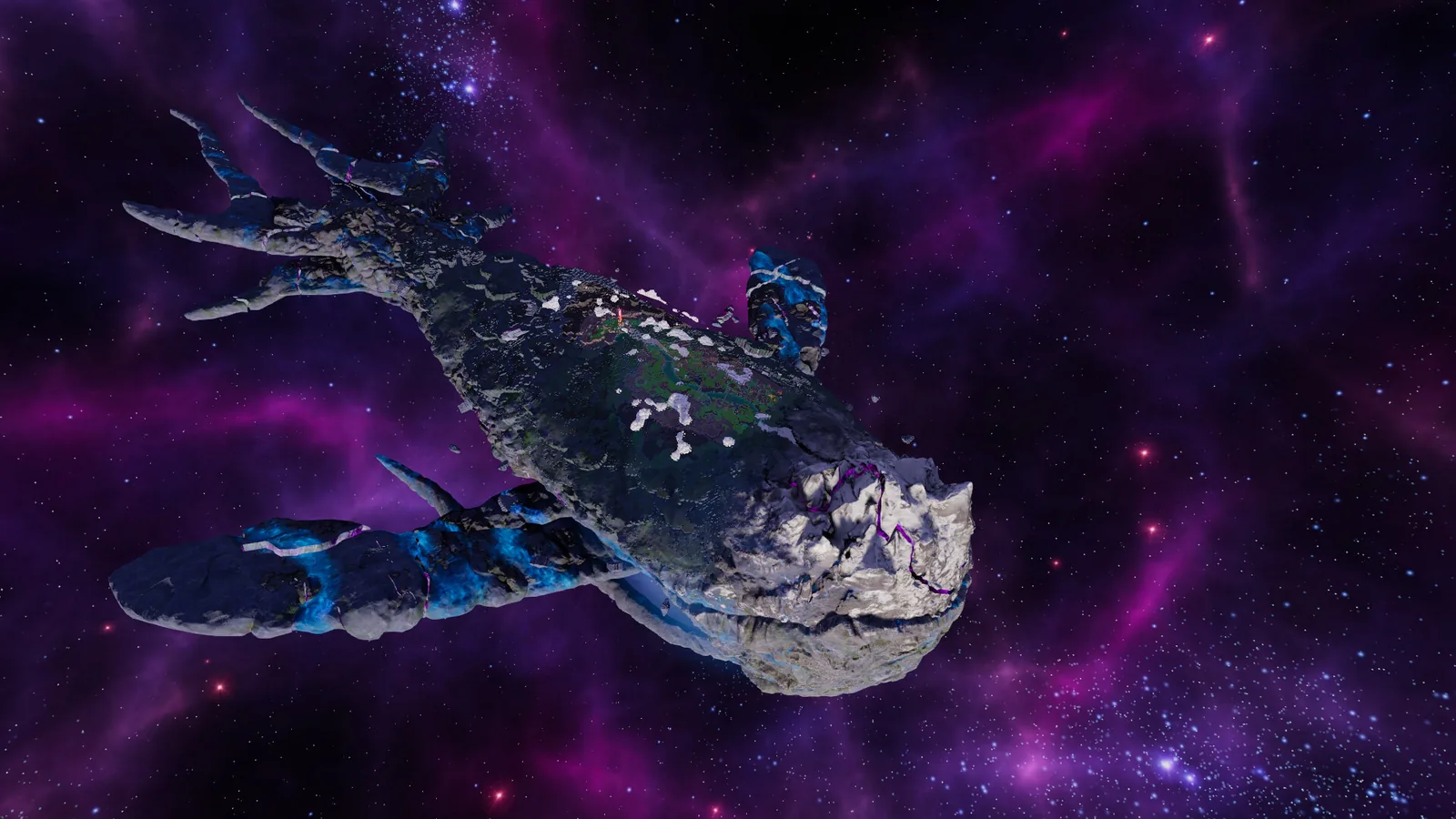
The last layer is imported. Settling a planet other than Kewa unlocks goods the whale cannot supply: berries, wheat, milk and eggs, plus shells that become cement. These arrive aboard your own ships and through Space Ports, so the planets and outposts guide explains the logistics that make them usable.
One resource does not exist until Kewa is thriving. A happy, healthy Kewa grows Kewa fruit trees, which hand Peeps an immediate wellbeing boost — a benefit that comes from care rather than construction. Keeping the whale in that state is the subject of the Kewa guide, and it pays back in resources as well as goodwill. Keep a running list of what each residual can become, because the byproduct you cannot use yet is usually the input you will need two unlocks from now.
| Resource | Where it comes from | Main uses |
|---|---|---|
| Wood | forest tiles, felled by Woodcutter, cut at Sawmill | construction and power |
| Stone | underground deposits listed on the resource overlay | construction material |
| Water | the Water Pump | Peep drinking water |
| Potatoes | the Potato Patch | baseline Peep food |
| Iron Ore | underground deposits reached by Mine | smelting toward metal and tools |
| Copper Ore | underground deposits reached by Mine | electronics |
| Sand | underground deposits reached by Mine | use not yet documented |
| Soot | your own production lines | Cleaner operation; steel, per hands-on previews |
| Wood Waste | timber processing | Compost production; Burner power in the demo build |
| Compost | Compost Heap, fed by Wood Waste | fertilising bare tiles for farms and forests |
| Debris | Landscaper digging work | stored, or stacked to raise new ground |
| Shells | a settled planet | cement |
| Berries, Wheat, Milk and Eggs | settled planets | widening the Peep diet |
| Kewa Fruit | a happy, healthy Kewa | a Peep happiness bonus |
Pro tip: Open the mineable-resources overlay before you plan an industrial district. It marks Iron Ore, Stone, Sand, Copper Ore and an unidentified deposit in current builds, and siting a Mine against that map once saves you from rebuilding the whole line later.
Sources
- Official Hooded Horse wiki, Terraforming (Debris, Compost, Saplings): https://wiki.hoodedhorse.com/Beyond_These_Stars/Terraforming
- Official Hooded Horse wiki, Pollution (Cleaners consume soot): https://wiki.hoodedhorse.com/Beyond_These_Stars/Pollution
- Official Hooded Horse wiki, Technology tree (Potato Patch as a starting building): https://wiki.hoodedhorse.com/Beyond_These_Stars/Technology_tree
- Steam store page (terraforming, forest atmosphere, survival loop): https://store.steampowered.com/app/2295060/
- Steam announcement, "Dev Blog #28 Settleable Planets" (planetary goods, shells to cement): https://store.steampowered.com/news/app/2295060/view/1838407329267634
- Steam announcement, "Dev Blog #29 Keeping Kewa Happy" (Kewa fruit, biome health): https://store.steampowered.com/news/app/2295060/view/1840944183775191
- Steam announcement, "Dev Blog #27 Sandbox Mode" (rivers, resource and terrain choices): https://store.steampowered.com/news/app/2295060/view/1836506165569153
- Epic Games Store hands-on preview (two-output production lines, soot into steel, Kewa's reactions): https://store.epicgames.com/en-US/news/beyond-these-stars-is-a-sustainable-city-builder-where-you-survive-on-the-back-of-a-sentient-celestial-whale