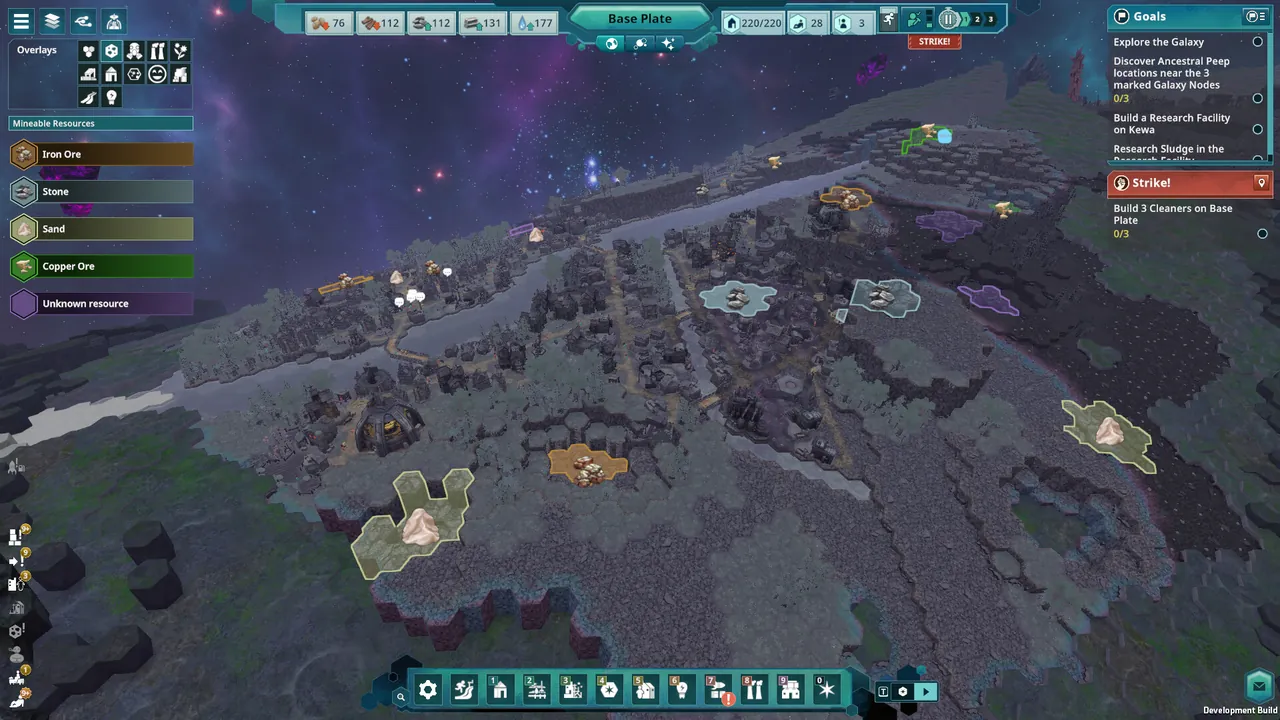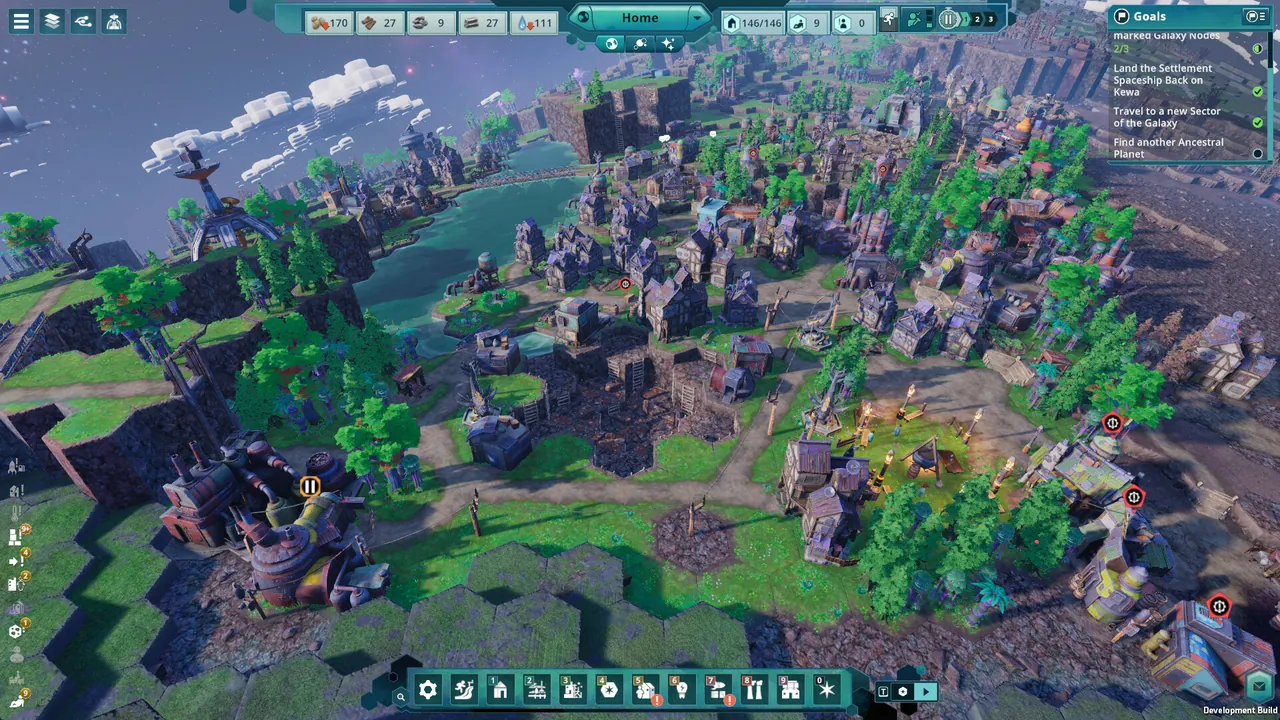
Beyond These Stars pays you twice for every production line: once in the resource you wanted and once in the waste you did not. Soot, wood waste and toxic ground pile up wherever industry clusters, and both peeps and Kewa pay the price. Pollution is not a late-game problem you can defer — it begins with your first smoke-stack. This page covers where waste comes from, what it does to your colony, and how to clear it before it costs you a strike.
Where Pollution Comes From
Waste starts as a byproduct. Hands-on previews describe each production line producing a main resource plus a second output, and wood waste and soot are the recurring examples. That design choice means a factory is never just a factory: it is a factory and a slow leak. Planning for the leak is part of planning the build, and the production chains page walks through how inputs, outputs and byproducts connect.
Soot is not purely a nuisance. Hands-on preview reporting indicates it can be routed into the steel chain, and the official wiki lists it as the supply Cleaners consume — a waste stream with two customers is worth routing rather than storing. Treating waste as a resource to reuse cuts how much you have to store and how much you have to clean.
Toxic areas are not a starting condition — you create them. According to the official wiki, when tiles sit at highly or very highly polluted for 15 minutes, the game turns them into a Toxic Area, and the consequences escalate sharply: peeps will not walk across toxic tiles, including to reach the workplaces inside them, which means those workplaces simply shut down. A neglected industrial corner does not just look bad; it stops being part of your settlement. Cleaning a toxic area takes specialist tools rather than a bigger broom.
Short of that threshold, the drain is steady and real. The developers confirm that peeps crossing polluted ground slow down and lose happiness faster, with the drain worsening as the pollution thickens; a hands-on preview makes the same point about morose, slow-moving workers on spoiled land.
Where you put industry changes how bad the problem gets, because waste builds up around the buildings that make it. Districts that share one corner of the map concentrate the mess; districts spread across the map keep any single area easier to service. The game ships Pollution Existing and Pollution Rate overlays for exactly this reason, so auditing a district is a matter of switching a view rather than guessing — and a healthy forest belt will visibly repaint recovered tiles as clear. Flipping that view on before you place new industry is the cheapest habit in the whole chain.
What Waste Costs You
The costs arrive in stages, and the earlier ones are easy to miss. First the tiles darken and your peeps slow on them; then happiness sags and production wobbles; eventually the drain reaches Kewa, whose biome health suffers when the ground it carries is dirty. Keeping the whale happy is therefore a pollution problem as much as a landscaping one, which is the argument the Kewa guide makes from the other direction. Because peep happiness already governs work, a polluted district loses output twice — once to slower walking and once to lower morale — before any shortage reaches your stockpiles.
Hands-on preview reports describe Kewa reacting to the state of its biome, so a grimy colony is visible to the whale and not only to you. That link matters because Kewa's mood is not private: it governs how fast you travel and how much of its past you recover. The connection is easy to forget, since the whale sits far from the tiles you paved over, yet it runs straight from the factory floor to the whale's condition.
The sharpest cost is a strike. Strikes trigger when a large share of peeps are unhappy, and polluted ground is one of the pressures that gets them there. The developers designed strikes with a root-cause goal attached — build more housing, clear a poisoned area, or construct a Cleaner — so the system often hands you the cleanup answer directly. Screenshots of the preview build show strike objectives that read like building a set number of Cleaners, which is the clearest sign the game treats cleanup as a first-class task rather than a chore you do when nothing else needs doing.
Cleaning Up Without Stalling Production
Cleaning up is a build problem with four moving parts, and the cheapest one comes first.
Forests are the settlement's first line of defence. The official wiki describes them as slowly reducing pollution near them, which is why ring-planting early polluters such as the Burner Generator with several forests can stop pollution accumulating at all — or at least buy the time to build your first Cleaner. Cleaners are the second line, and they come with a quirk worth knowing before the strike goal names them: they need a continuous supply of soot, conveniently produced by the same Burner Generators and Ore Smelters causing the problem. A heavy industrial area may need two or three Cleaners working together, and temporarily switching the worst buildings off while they catch up is part of the job rather than an admission of failure.
Dump yards give waste a home — community reports describe a Dump as a two-by-two plot that absorbs what your lines produce — so pairing a Dump with every dirty industry keeps the leak contained. Trees and forest maintenance also handle a third job beyond scrubbing: a planted, well-kept forest spreads breathable ground over time, which the buildings guide places alongside the other service structures worth planning for early.
Waste-handling conventions below follow the official wiki's pollution and terraforming pages:
| Waste source | Where it comes from | How to handle it |
|---|---|---|
| Soot | Byproduct of Burner Generators and Ore Smelters; the Cleaner's operating supply | Pair every soot source with a Cleaner and keep the supply flowing |
| Wood waste | Byproduct of timber processing; also feeds Compost Heaps | Store it, or route it into composting for terraforming |
| Toxic area | Tiles left highly polluted for 15 minutes (official wiki) | Clean with the Toxic Tile Scraper, then chemical-fed Cleaners once available; restore the ground after |
| Working industry | Extraction, refining and production buildings pollute while running | Spread the worst polluters out and ring early industry with forests |
| Polluted peep routes | Contamination under your busiest paths | Prioritise forests, then Cleaners, along the roads peeps use most |
Terraforming is the fourth part and the one people forget. The official wiki describes compost improving bare ground and landscaping reshaping terrain, with the Landscaper-to-Tree-Nursery chain supporting expansion. The terraforming guide separates terrain, soil and forest work, while the technology tree covers its documented prerequisites. Plan the usable footprint alongside cleanup rather than expanding industry into another unhealthy area.
Pro tip: Build one Dump and one Cleaner per industrial district before you expand the district. Waste accumulates where production runs, so a small plot of cleanup infrastructure placed early costs far less than the strike and the repair bill that follow a neglected factory block.
Sources
- Official Hooded Horse wiki, Pollution (sources, toxic areas, overlays): https://wiki.hoodedhorse.com/Beyond_These_Stars/Pollution
- Official Hooded Horse wiki, Terraforming (compost, Landscaper chain): https://wiki.hoodedhorse.com/Beyond_These_Stars/Terraforming
- Steam announcement, "Dev Blog #23 Strikes": https://store.steampowered.com/news/app/2295060/view/1830163047253538
- Steam announcement, "Dev Blog #29 Keeping Kewa Happy": https://store.steampowered.com/news/app/2295060/view/1840944183775191
- Steam store page: https://store.steampowered.com/app/2295060/
- Epic Games Store hands-on preview (two-output production lines, soot into steel, Kewa's reactions): https://store.epicgames.com/en-US/news/beyond-these-stars-is-a-sustainable-city-builder-where-you-survive-on-the-back-of-a-sentient-celestial-whale